
Ask sellers why they have not built their own store yet and one word keeps surfacing: migration. It sounds like moving house. Pack everything, shut the old place, hope nothing breaks in the truck. No wonder the project stays on next year's list.
Here is the truth that changes the whole plan: nothing migrates. Your listings stay listed, your rank stays ranked, your orders keep shipping. What actually happens is an extension. A second place of business goes up beside the first, and specific parts of your Amazon track record carry over into it.
This guide is the honest walkthrough: what carries over, what gets built new, what stays where it is, and the order it all happens in. It assumes the decision is made. If it is not, start one shelf back with Selling on Amazon vs Selling on Your Own Website.
The Word Migration Is the First Mistake
Words set budgets and timelines, and migration is the wrong word doing real damage. It implies departure, downtime, and risk to the channel that pays the bills. Sellers picture their Amazon revenue in a cardboard box on a truck, and reasonably decide not to touch anything.
The correct mental model comes from physical retail. A brand with a strong stall in someone else's market opens a shop of its own across town. The stall does not close. The market does not punish it. The shop opens carrying the stall's reputation, and the stall keeps trading through every day of the fit-out.
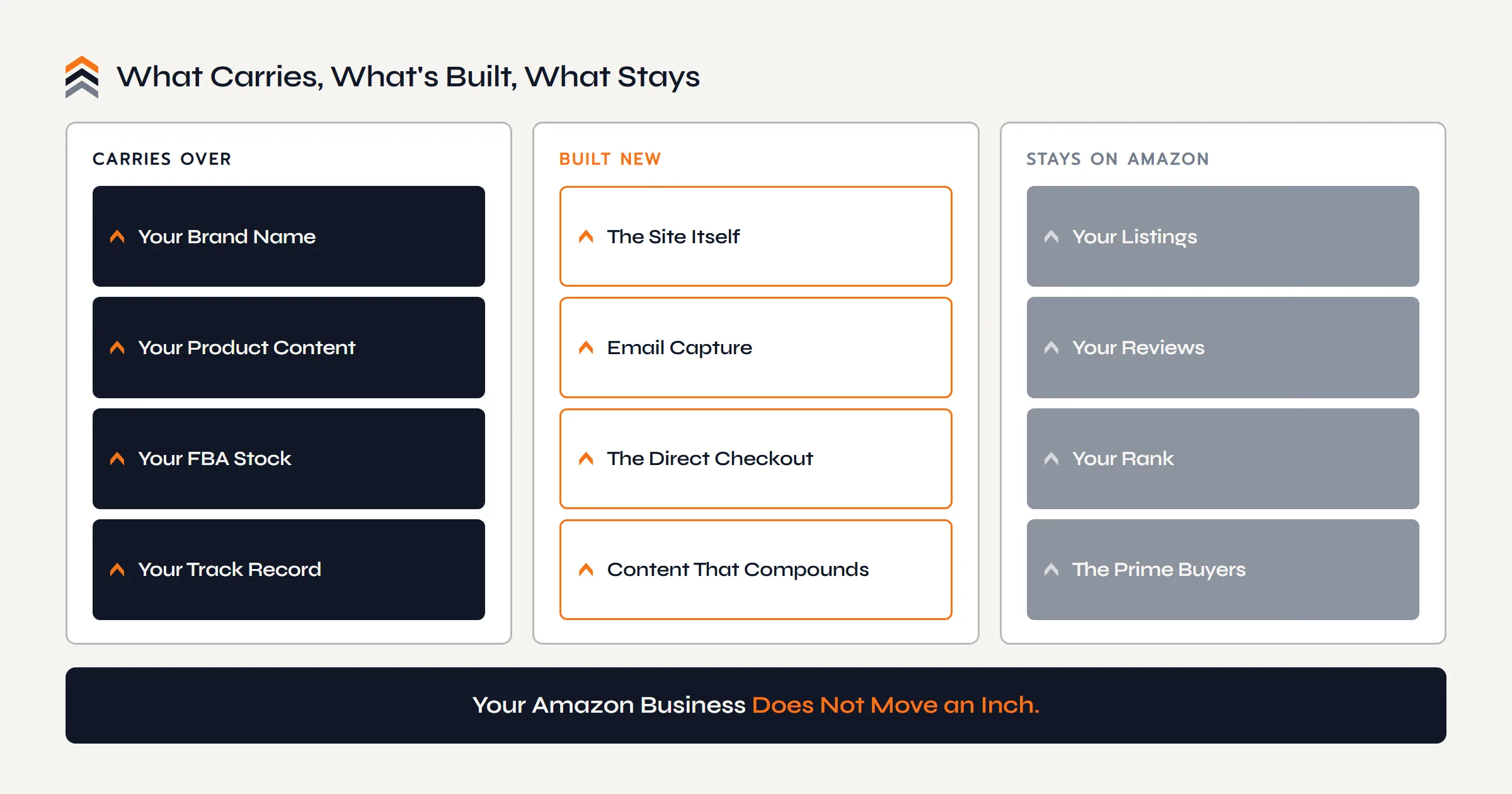
Nothing about your Amazon business moves. The store is built beside it.
What Carries Over From Your Amazon Business
More than sellers expect, less than they hope. The honest inventory:
- Your brand name and its search demand. Every order you have ever shipped taught someone your name. Those Google searches happen today and land on a listing hemmed in by competitors' ads. They route to your store the day it exists.
- Your product content. The photography, the copy, the specs, everything you created is yours to reuse and improve. The marketplace formats it lived in, like A+ layouts, stay behind; the assets come with you.
- Your FBA stock. Multi-channel fulfillment can ship your store's orders from inventory already sitting in Amazon's warehouses. The fees deserve a look, but it means the store launches without renting a warehouse.
- Your track record. Years of selling, order volume, a proven product. Not the reviews themselves, which the next section covers honestly, but the story those numbers let you tell.
What Gets Built New
The new construction is exactly the owned layer of the business, the four pieces mapped in The Complete Guide to Building Your Brand Beyond Amazon:
- The site itself, on a domain in your name: the brand home where your searches land and your story lives.
- Email capture, live from day one, turning visitors and orders into an audience you keep.
- The direct checkout, switched on when the numbers justify it: orders with no referral fee carved out. The free margin calculator shows what that carve-out is worth on your own product.
- Content, the slowest and longest-paying piece: pages that earn rankings which accrue to your domain, not your listing.
Who builds it is the other decision. It is the part we do for a living, so the bias is declared: our packages are tiered to this exact list, and every build ends with the handover. Whoever builds yours, the test below has to pass.
A Quick Test
The extension test. A real plan answers all four:
- Who builds it, and what exactly do they hand over?
- What is on the site on day one, before any store?
- Where does its first traffic come from?
- Who maintains it after launch, and is that written down?
If all four have answers, the move is a project. If not, it is still a wish.
How Much of Your Business Do You Actually Own?
Before the build starts, know your starting point. The Push Roadmap is a free 12 page PDF with the Ownership Scorecard: score where your brand stands today and see the whole move mapped in order.
Sent straight to your inbox.
What Stays on Amazon (and Should)
The listings, the rank, the Buy Box, the Prime buyer experience: all of it stays, on purpose, doing the job it does better than any store you could build. The extension does not compete with the stall. It sells to the people the stall could never reach on terms the stall could never offer.
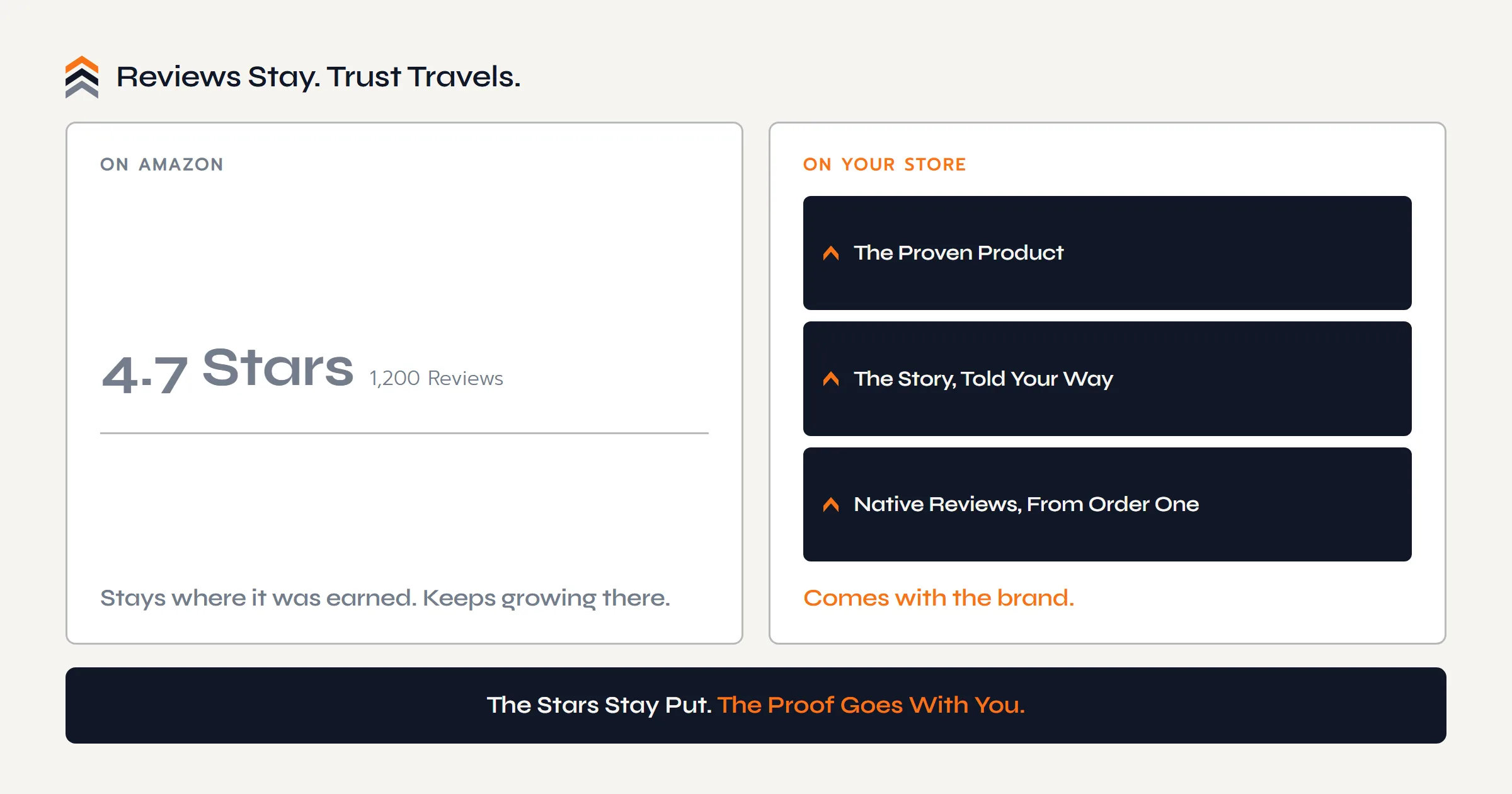
And the one that stings: reviews. They were earned on Amazon and they stay on Amazon. No honest platform lets you import marketplace reviews as your store's own, and passing them off as native reviews is a trust problem waiting to be discovered. What travels is the track record they represent: the proven product, the years of volume, the story you now get to tell on your own pages while your store's first native reviews accumulate. The full rebuild, from borrowed citation to owned proof engine, is its own guide.
Your reviews stay on Amazon. The trust they built comes with you.
The rest of what the marketplace holds, and what each piece costs a brand over time, is inventoried on What You Don't Own.
The Platform Question, Briefly
Most searches about this move have a platform name attached, usually Shopify. So, briefly and honestly: Shopify is excellent rented software, the builders are honest brochure tools, and WordPress with WooCommerce is the option you own outright, which is why it is the ground we build on.
The full comparison through the ownership lens, including what each platform keeps if you ever leave it, is its own guide: Choosing Your Platform: WordPress vs Shopify vs Wix. The one-line version: you are extending off rented ground, so do not extend onto more of it.
The Go-Live Sequence
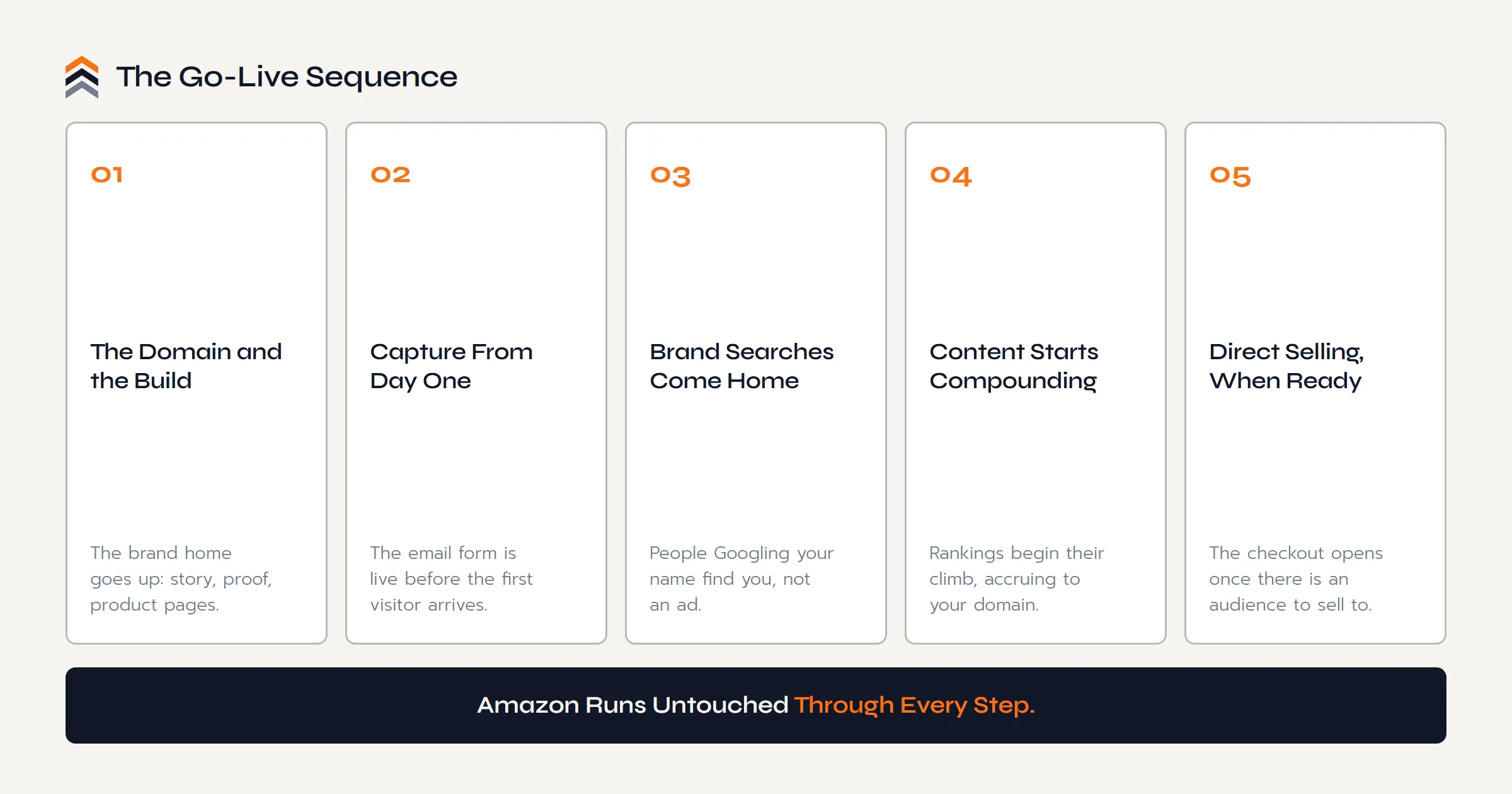
The move has an order, and the order is most of the strategy. Five steps, none of which touches your Amazon account:
- The domain and the build. The brand home goes up: story, proof, product pages. The business end of the project, and the fastest part.
- Capture from day one. The email form is live before the first visitor arrives, so no traffic is ever wasted.
- Brand searches come home. The site claims the demand your orders already created: people Googling your name find you, not a competitor's ad.
- Content starts compounding. Pages that answer your category's questions begin their slow climb, accruing to your domain.
- Direct selling, when the numbers say so. The checkout opens once there is an audience to sell to. A store with no street comes last, not first.
What the build itself looks like from the inside, first call to keys in hand, is laid out step by step on How It Works.
An Honest Note
What the move actually asks of you:
- Content is usually the clock. The build is fast; gathering your photos, words, and product truth is what sets the pace.
- Maintenance needs an answer before launch, whether that is you, your builder's care plan, or someone you trust.
- The compounding layers take patience. Brand searches route immediately; rankings and content earn their keep on their own schedule.
The build is the fast part. Decide the slow parts before you start.
Running Both Channels After the Move
Day two is simpler than sellers fear, because the channels want different jobs. A few working rules keep the pair healthy. Keep sticker prices consistent, because pricing your own store far below your listing can cost the listing its Featured Offer; give the owned channel its edge through bundles and subscriber perks instead. Let multi-channel fulfillment ship store orders from your FBA stock until volume argues otherwise. And if your brand is registered, remember that traffic you send to your own listings can earn part of the referral fee back through the Brand Referral Bonus.
Run this way, the pair compounds: email launches lift both channels, branded search feeds the algorithm, and the store puts a floor under the account's bad weeks. Which is the whole exposure math of Reducing Amazon Dependence: the sales stay, the risk falls.
Alongside, never instead. The stall keeps trading. The shop keeps growing. The brand, finally, owns one of them.
Questions Sellers Ask
Do My Amazon Reviews Transfer to My Own Store?
No, and be wary of anyone who says otherwise. Marketplace reviews belong to the marketplace and cannot be imported as your store's native reviews. What you can honestly carry is the track record: the proven product, the volume, the story your numbers tell on your own pages while your store earns its first reviews of its own.
Will My Own Store Hurt My Amazon Sales?
The evidence runs the other way. A brand people can find off Amazon earns the branded searches the marketplace's algorithm rewards, and shoppers who research you on Google often finish the purchase on your listing anyway. The real risk sits with the account that has no second channel and therefore no floor under a bad week.
Can My FBA Inventory Ship My Website Orders?
Yes. Multi-channel fulfillment ships orders from any channel using the stock already in Amazon's warehouses, which means the store can launch with zero new logistics. Weigh the per-order fees and the packaging options against running your own fulfillment as volume grows, but as a starting arrangement it removes the biggest operational excuse.
Should My Own Store Be on Shopify or WordPress?
Both can run a real store; they differ in what you hold. Shopify is rented software with a permanent subscription and a narrow exit door. WordPress with WooCommerce is owned outright: your files, your database, any host you choose. We build on WordPress for exactly that reason, and the full honest comparison is in Choosing Your Platform.
How Long Does the Move Take?
The build itself is the fast part of the timeline. What sets the real pace is content: product photography, brand story, the words on the pages. Sellers who arrive with their material ready move quickly; sellers who gather it as they go take longer, and that is fine too. The compounding layers, rankings and content, then grow on their own schedule after launch.
Does Anything Happen to My Amazon Account During the Build?
Nothing. The listings never pause, the rank is never touched, and no permission from Amazon is needed to sell on your own website. The only conduct rule worth knowing is the one that always applied: do not divert Amazon's buyers off the marketplace from inside its channel. Building your own demand outside it is not just allowed, it is the point.
Can My Own Store Offer Prime?
Amazon offers Buy with Prime for exactly this, and it deserves a clear-eyed look rather than a reflex in either direction. We evaluated it for client builds and chose not to install it yet: the trade is that Amazon re-enters your checkout and keeps a copy of the customer. It has narrow legitimate uses, and the full reasoning now lives in the first-party data guide.
What Does the Build Cost?
It depends on the depth: a brand home, a found-on-Google build, or a full store are different projects. What matters more than the number is the shape: a one-time build you own outright versus a platform subscription that never ends. Our packages and prices are public on the Services page, ownership handover included in all of them.
The Conclusion
The move from Amazon to your own store is the most misnamed project in ecommerce. Nothing migrates. The listings keep selling, the reviews keep accumulating, the rank holds its ground, and beside all of it a second place of business goes up carrying your name, your content, your stock, and your track record.
The order is the strategy: build the home, capture from day one, claim the searches you already earned, let content compound, and open the checkout when the audience is there. Five steps, and not one of them touches the channel that funds them.
Your sales can live on Amazon. Your brand should not.
The Next Move
You Have Read the Argument.
Pick Your Path.
Ready to Build
A free call, no pitch script. Walk us through your Amazon business and get a straight answer on what your own site would take.
Book a Free CallStill Weighing It
The Push Roadmap is the free PDF version of this decision. Put a number on where your brand stands before you commit to anything.