
Ecommerce SEO is the work of getting your online store to show up in Google's unpaid results, so shoppers searching for what you sell land on your product and category pages instead of someone else's. Done well, it turns search into a stream of buyers you did not pay per click to reach. For an Amazon seller, that idea can feel foreign, because Amazon trained you to buy visibility one click at a time. This is the channel that works the other way, and the basics of ecommerce SEO are more learnable than they look.
Here is the part worth sitting with. On Amazon, every bit of visibility is rented. You bid for the click, you pay when it lands, and the moment you stop paying it vanishes. Ecommerce SEO is the opposite trade: slow to build, but once your pages rank, the clicks keep coming at almost no cost, on a site you own. This article teaches the real thing, the levers that actually move rankings, then shows why it matters more for you than for the average store.
What Ecommerce SEO Is
Ecommerce SEO is the process of optimizing an online store to rank higher in organic search for the terms people use when they are ready to buy. Unlike general SEO, which leans on blog content, ecommerce SEO lives on the pages that sell: your category pages and your product pages, each one a possible landing spot for a shopper with their card halfway out. The goal is simple to state and slow to earn. When someone searches for what you sell, your store is what Google shows them, and you did not pay for the placement.
Why It's Not Regular SEO
If you have read generic SEO advice, most of it was written for blogs and service sites. Ecommerce changes the shape of the work in a few specific ways:
- The money pages are templated and many. A store has dozens or hundreds of product and category pages, not a handful of articles, so the work is systematic rather than one-off.
- Duplicate content is a constant risk. Product variants, filter URLs, and copy-pasted manufacturer descriptions spawn near-identical pages that compete with each other and drag you down.
- Technical health carries more weight. Big catalogs, filters, and heavy images make site speed, crawlability, and clean structure load-bearing, not a nice-to-have.
What Actually Moves It
Strip ecommerce SEO down and it runs on a handful of levers, roughly in this order of impact:
- Keyword research by intent. Match each search to the right page: broad commercial terms to category pages, specific ones to products, questions to guides. Chasing volume without intent is how a store ranks for words that never buy.
- Site architecture. A shallow, logical structure where every product sits a few clicks from the homepage. It helps shoppers and tells Google which pages matter.
- Technical health. Speed, mobile, clean URLs, and canonical tags that stop your filters and variants from spawning thin duplicate pages. Invisible when it works, quietly fatal when it doesn't.
- Category pages. The highest-leverage page most stores neglect, which is worth its own beat in a second.
- Product pages. Unique descriptions written by you, not the manufacturer, plus real images, reviews, and product schema so Google can show your price and star rating.
- Content that feeds them. Buying guides and how-tos that catch early interest and pass authority down to the pages that sell.
- Authority. Google treats links from other trusted sites as votes of confidence. A store that earns mentions from industry publications, suppliers, or respected blogs reads as more credible than one with no outside references, and that credibility is often what decides whether you can rank for the most competitive terms. These links are the slowest thing on this list to earn, which is exactly why they are worth the most.
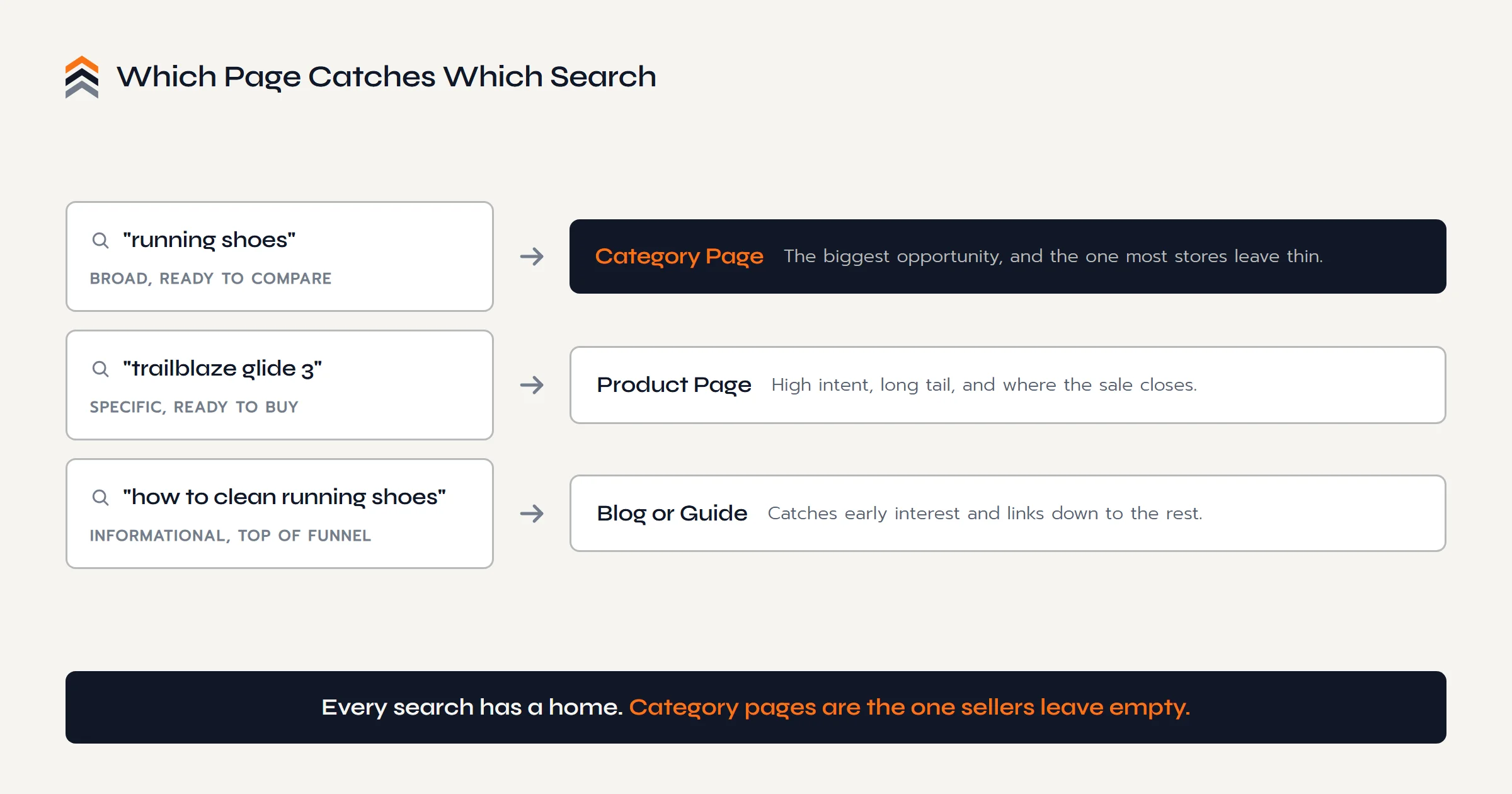
That fourth lever deserves a closer look, because it is the one sellers skip. Category pages, the ones that group your products, usually target the broadest commercial searches you can realistically rank for. Most stores leave them as a bare grid of products with no real copy, which is a gift to any competitor who bothers to write a proper one. A category page with a genuine intro, the right heading, and clean internal links to its products is often the single biggest ecommerce SEO win available, and almost nobody takes it.
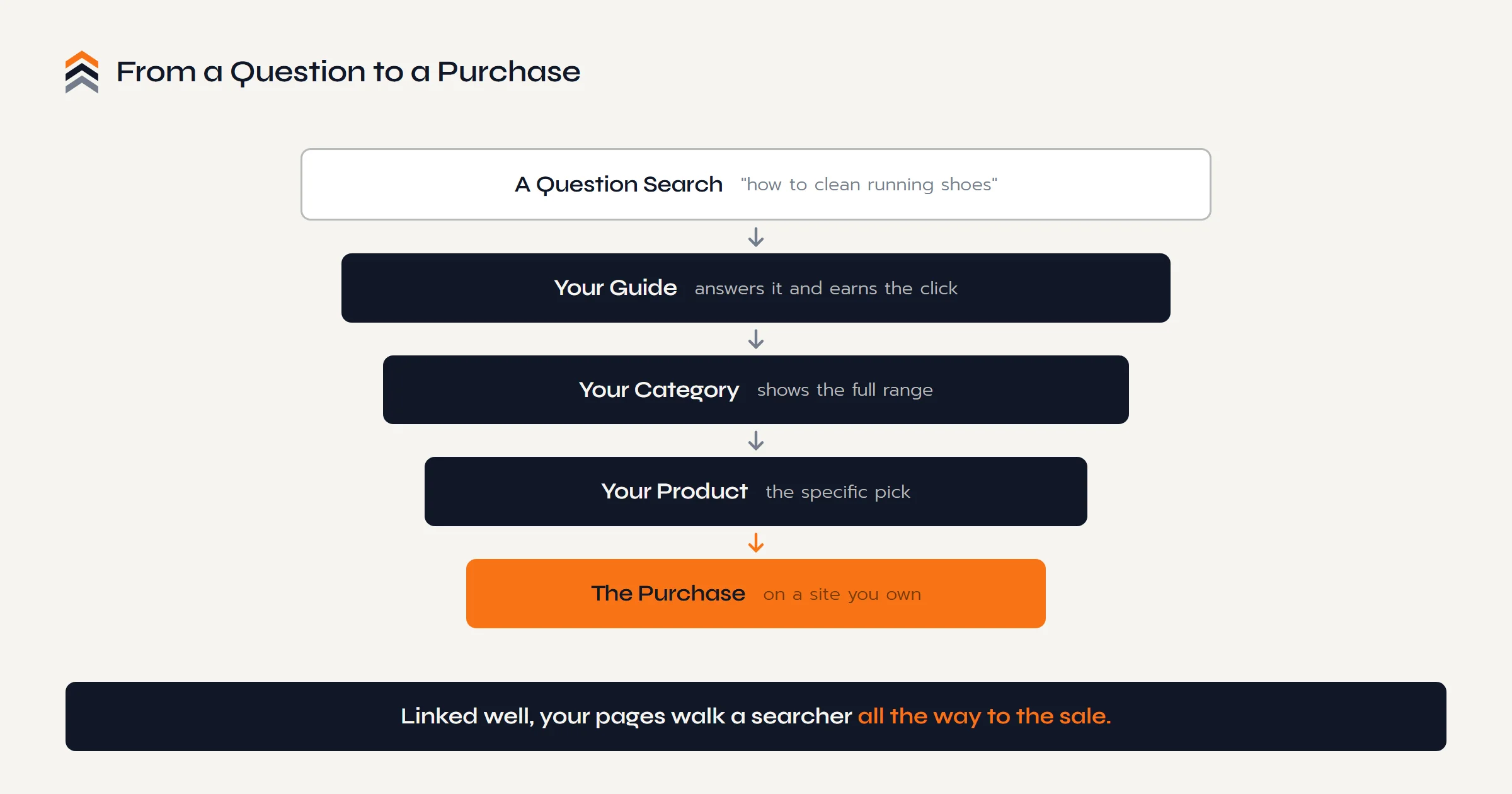
None of these page types works alone. Linked well, they form a path: a guide answers an early question, hands the reader to the category that fits, which points to the exact product, which closes the sale. That internal linking is what turns a pile of pages into a store that sells while it ranks.
Rented Clicks vs Owned Demand
Now the part that matters more for an Amazon seller than for almost anyone else. Your entire growth instinct was built inside Amazon, where visibility means one thing: pay. You bid on Amazon ads, you optimize for Amazon's search algorithm, and even the organic rank you earn there is increasingly shaped by ads and personalized to each shopper. It works, but it is rented, all of it, for as long as you keep paying.
Ecommerce SEO is a different kind of asset. The work is front-loaded, but a page that ranks keeps bringing buyers month after month at almost no marginal cost. Industry estimates put the cost of an organic lead far below a paid one, and organic search drives a large share of all ecommerce traffic, though the exact figure varies by who is counting. The number matters less than the shape of it: paid stops the day you stop paying, and organic keeps paying after you stop. That difference is the whole reason one channel is worth leaning less on the platform to build. And the demand it earns compounds further once you capture it, because a visitor who joins your list can be sold to again through email marketing, the other growth channel no platform can rent you.
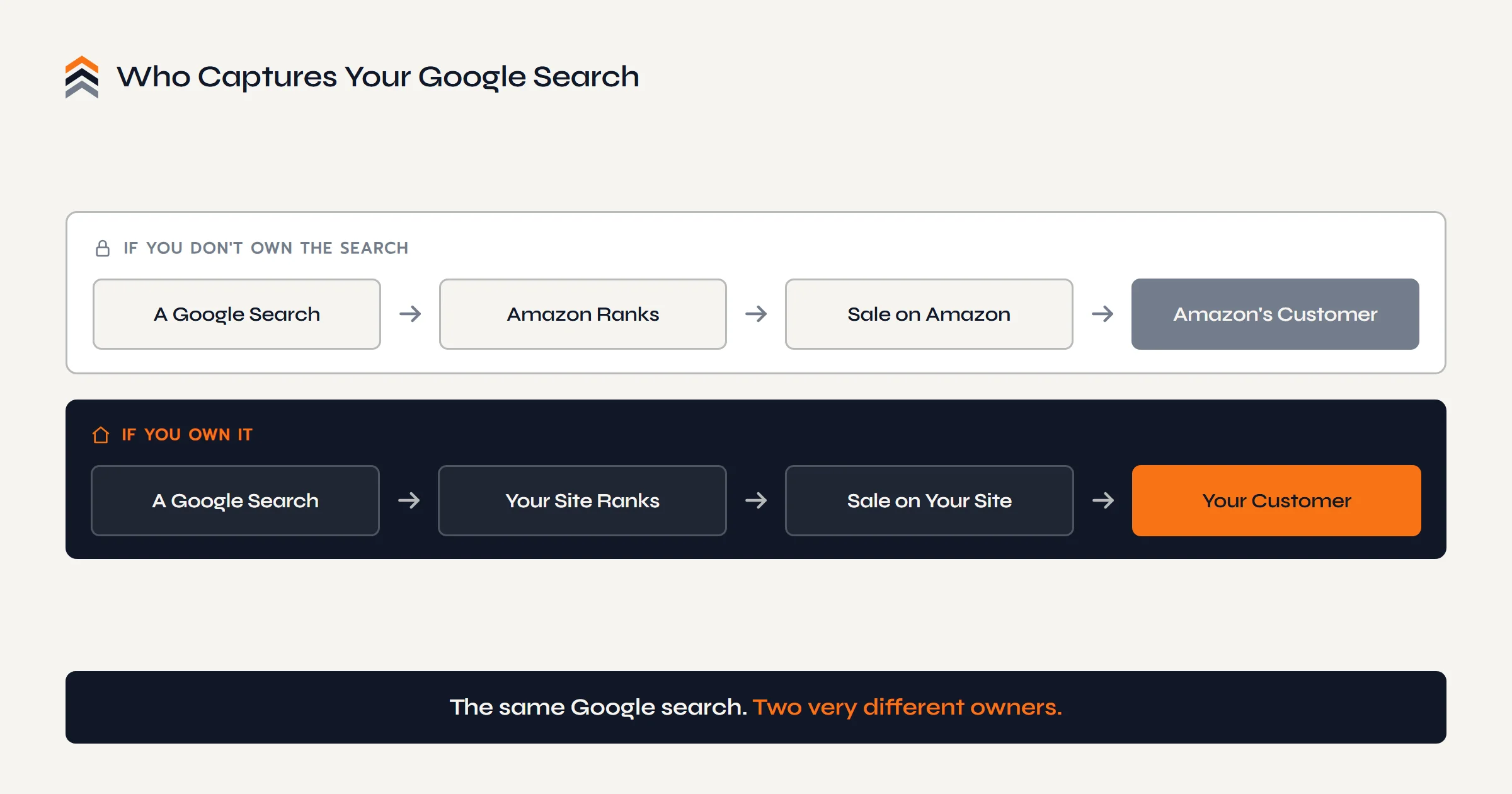
There is a sharper version of this for you specifically. When a shopper Googles your brand or your category and you do not rank, someone does, and very often it is Amazon. Google hands that shopper to a marketplace, where you may pay an ad and a referral fee to win them back, and where they still never become your customer. Own the search yourself and the same click lands on your site, where the sale, the customer data, and the next order are all yours. That is the real case for pulling Google's demand toward something you own instead of feeding it back to the platform.
SEO is the organic half of that Google real estate. Its paid cousin, Google Shopping, puts your product directly in the results for a fee, and the two work well together: ads for speed while the rankings you own slowly compound underneath. If it is new to you, we cover how Google Shopping actually works from the ground up.
Where Should Your Google Demand Land?
The Push Roadmap is a free 12 page PDF with the Ownership Scorecard. Put a number on how much of your brand you actually own today, and see the whole move mapped in order.
Sent straight to your inbox.
How Long It Takes, and Why That's the Point
The honest answer, and the one most sellers do not want to hear, is that ecommerce SEO is slow. Expect three to six months to see early movement, and six to twelve or more before it becomes a channel you can count on. Ahrefs, polling thousands of professionals, found three to six months is the typical wait for SEO to show results. Coming from Amazon ads, where a campaign can move sales the same afternoon, that lag can feel like something is broken.
But the lag is the entire point. The reason a ranked page is worth building is the same reason it takes time to build: it is hard to earn and hard to lose, so it keeps working long after the effort is spent. A paid click is instant and gone. A ranking is slow and durable. One is a cost you carry every month; the other is an asset that appreciates. Treat it like building equity rather than flipping a switch, and the channel that felt frustratingly slow becomes the one you are gladdest you own.
A paid click is instant and gone. A ranking is slow and keeps paying after you stop.
An Honest Note
Two things can be true at the same time:
- SEO will not save a bad store. It brings the shopper to the door; the site still has to convert them. It is a traffic channel, not a magic one, and it works best on a store built to sell.
- But it is the one channel Amazon can't rent back to you. Paid visibility is theirs to price and switch off. Organic is yours to build and keep. That is the difference between a cost and an asset.
Rent the clicks if you must. Build the ones you get to keep.
Questions Sellers Ask
What Is Ecommerce SEO?
Ecommerce SEO is the work of optimizing an online store to rank higher in unpaid Google results for the terms people search when they want to buy. Unlike general SEO, it centers on product and category pages rather than blog posts, so each of your selling pages can bring in shoppers you did not pay per click to reach.
How Long Does Ecommerce SEO Take to Work?
Usually three to six months to see early movement, and six to twelve or more for it to become a real channel. Ahrefs, polling thousands of professionals, found three to six months is the typical wait. SEO is slow and compounding by nature, which is exactly why a ranking, once earned, keeps paying.
What Is the Difference Between Ecommerce SEO and Regular SEO?
Regular SEO usually centers on blog and informational content. Ecommerce SEO centers on transactional pages at scale, your category and product pages, and adds problems those pages create: duplicate content from variants and manufacturer descriptions, faceted filter URLs, and product schema. The fundamentals are the same; the emphasis and the technical pitfalls are different.
Should I Focus on Product Pages or Category Pages?
Both, but category pages are the bigger and more neglected opportunity. Category pages target broad commercial searches with real volume, and most stores leave them as a bare product grid with no copy. Product pages capture specific, ready-to-buy searches. Optimize categories for reach and products for the close.
Is It Bad to Use the Manufacturer's Product Description?
Yes, for SEO. Manufacturer descriptions are copied across every store that sells the item, so Google sees your page as duplicate, low-value content and struggles to rank it. Writing your own unique product descriptions is one of the simplest ways to separate your pages from every competitor selling the same product.
Is SEO Worth It for Ecommerce?
For most stores, yes. Organic search drives a large share of ecommerce traffic, and an organic click costs far less than a paid one over time. The catch is patience: SEO takes months to build. It is worth it as a long-term asset, not a quick fix, and it pairs well with paid channels.
How Much Does Ecommerce SEO Cost?
It ranges widely. You can do the fundamentals yourself for the cost of your time, while agencies and specialists typically charge monthly retainers that scale with the size of your catalog and how competitive your market is. Unlike paid ads, the spend builds a durable asset rather than buying clicks that stop the moment you stop paying.
The Conclusion
So, what is ecommerce SEO? The slow, systematic work of making your own store the answer Google gives when someone searches for what you sell. It runs on keyword intent, clean architecture, healthy technicals, and above all the category and product pages most stores neglect. It takes months to build. And it builds the one growth channel Amazon structurally cannot sell you: demand you own, that compounds while you sleep.
For a seller who has only ever rented visibility, that is a genuinely new idea, and you do not have to leave Amazon to act on it. You just have to stop letting Amazon quietly capture the Google searches that could have been landing on a brand you own. Start now, treat it as equity, and the slow channel becomes the durable one.
Your sales can live on Amazon. Your brand should not.
The Next Move
Search Sends the Shopper Somewhere.
Make It Somewhere You Own.
Ready to Build
A free call, no pitch script. Walk us through your Amazon business and get a straight answer on what a store built to rank would take.
Book a Free CallStill Weighing It
The Push Roadmap is a free PDF with the Ownership Scorecard. Put a number on how much of your brand you actually own today.