
Social media brand awareness is the extent to which people recognize and remember your brand as a result of meeting it on social platforms, recalling your name, your look, or your product when they see you again or feel a related need. It is one of the fastest ways to put a brand in front of new people, and for an Amazon seller it is a natural part of building a brand beyond the marketplace. Done well, it moves strangers up the awareness ladder, from recognizing you when prompted, to recalling you unprompted, to thinking of you first.
This article covers what social media brand awareness actually is, how to build it, and how to measure it honestly. Then it gets to the part most guides skip: social is a powerful awareness engine, but the audience you build on it is not yours. You are growing it on rented land, and the rent goes up. Both things are true, and the smart move depends on holding them together.
What It Actually Is
Awareness is not one thing, it is a ladder, and social media is built to climb it. Reach puts you in front of new people. Repetition, seeing you again and again, is what turns exposure into memory. Distinctive branding, the same logo, colors, and voice every time, is what makes you recognizable mid scroll. And shareability multiplies all of it, because a post that gets reshared reaches people you never paid to touch. Those mechanics are exactly why social works for awareness, and they map directly onto the difference between brand recognition and recall: reach and repetition earn recognition, while distinctiveness and consistency are what turn recognition into the recall that actually drives a purchase.
The trap is confusing activity with awareness. Posting is not awareness. Followers are not awareness. Awareness is whether a real person, days later, remembers you when it counts. Everything below is aimed at that, not at the vanity number next to your handle.
How to Build It on Social Media
There is no secret, only a stack of things done consistently. The levers that actually move awareness:
- Lock a consistent identity and cadence. Same logo, palette, and voice on every post, published on a schedule you can sustain. Consistency is not a style preference; it is the mechanism of recognition.
- Pick the platforms your buyers use, not all of them. Go deep where your audience already is, Instagram and TikTok for most visual products, rather than spreading thin across every network.
- Lead with short form video. Reels, TikTok, and Shorts drive the most reach and discovery right now, and short form video is the single format marketers report as their highest performing, per HubSpot's 2025 research.
- Publish value, not ads. Educate, entertain, and build community most of the time, and sell only a fraction of it. People follow brands that give them something, then buy from the ones they remember.
- Use user generated content and creators. Reposts, reviews, and unboxings are social proof that also expand your reach, and a well matched creator lends you an audience you have not built yet. This is the same trust engine behind social proof across your whole brand.
- Engage like a person. Reply, join conversations, answer DMs. Reach gets you seen; engagement is what turns being seen into being remembered.
- Amplify with paid and partnerships. As organic reach shrinks, a modest awareness ad budget buys the reach the algorithm no longer gives away, and cross promotions with complementary, non competing brands swap you into an audience you have not built yet.
None of this is complicated. It is just relentless, and it rewards the brand that shows up the same way for a long time. If you want the fuller system for what to publish and where, a content plan built for product sellers lays it out.
How to Measure It
Every platform hands you a dashboard of native metrics, and they are useful as far as they go: reach and impressions show how many people saw you, follower growth shows momentum, and engagement rate shows whether the content resonates. Brand mentions and share of voice show how much of the category conversation is about you versus competitors. Track them, but do not mistake them for the goal.
The metrics that prove awareness became something real sit off the platform. When your awareness is working, more people start Googling your brand by name, more type your web address directly, and more join your email list after finding you on social. Branded search, direct traffic, and signups are the signals that borrowed attention turned into demand you actually own. A million impressions that never lift any of those three is a number, not an asset. Treat those three as your real scoreboard, and the vanity metrics become what they should be: leading indicators, not the finish line.
The Catch: It Lives on Rented Land
Here is the part an Amazon seller will recognize instantly, because it is the same lesson the marketplace already taught. The audience you build on social is not yours. The platform owns it, sets who sees your posts, and can change the terms whenever it likes. You are not building an asset there; you are renting reach, and the rent keeps rising.
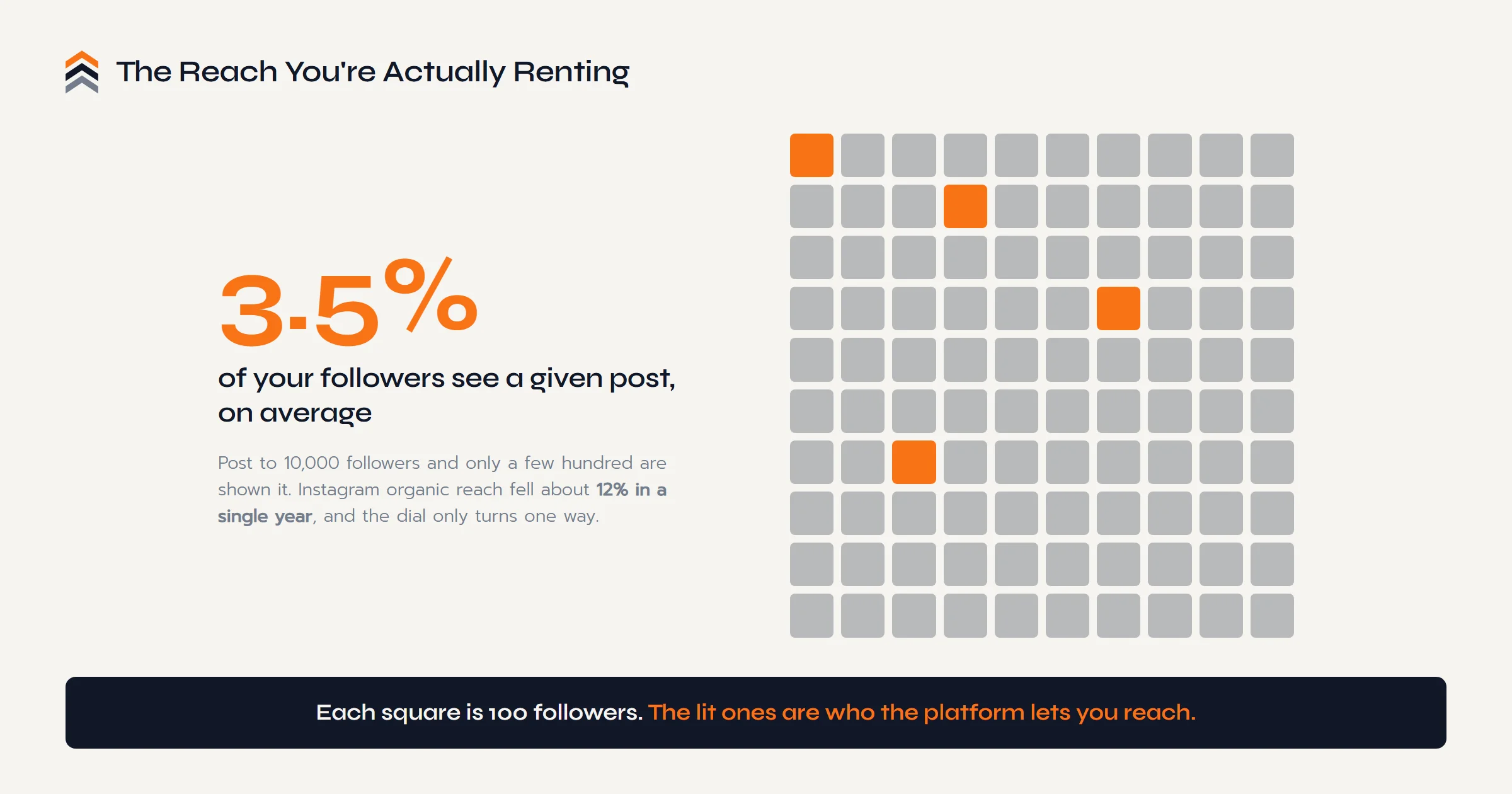
The numbers are blunt. Organic reach on the mature platforms has collapsed to roughly 3 to 4 percent of your followers per post, according to Socialinsider and Sprout Social, and it is still falling. Socialinsider measured Instagram reach down about 12 percent in a single year. So a hard earned following of 10,000 might mean a few hundred people actually see any given post, and fewer next year. On top of that, algorithms shift without warning, and accounts get suspended, hacked, or restricted with little recourse, taking the whole audience with them. A following is not something you own. It is access the platform can revoke.
And platforms themselves are not permanent. Feeds that dominated a decade ago are afterthoughts now, and the reach on any given network tends to peak and then decline as it matures and squeezes more revenue from the same attention. Betting your entire brand on the terms of a company that answers to its own shareholders, not to you, is the exact position an Amazon seller is already trying to get out of. Social is a second version of that same bet.
None of this is a reason to abandon social. It is a reason to be clear about what social is for. It is the best introduction machine ever built, and a terrible place to keep the relationship. The awareness is real; the audience is borrowed. Which points directly at what to do with it.
Turn Borrowed Attention Into an Asset.
The Push Roadmap is a free 12 page PDF with the Ownership Scorecard. See how much of your audience you actually own today, and the move that turns followers into a list and a channel that are yours.
Sent straight to your inbox.
Feed a Channel You Own
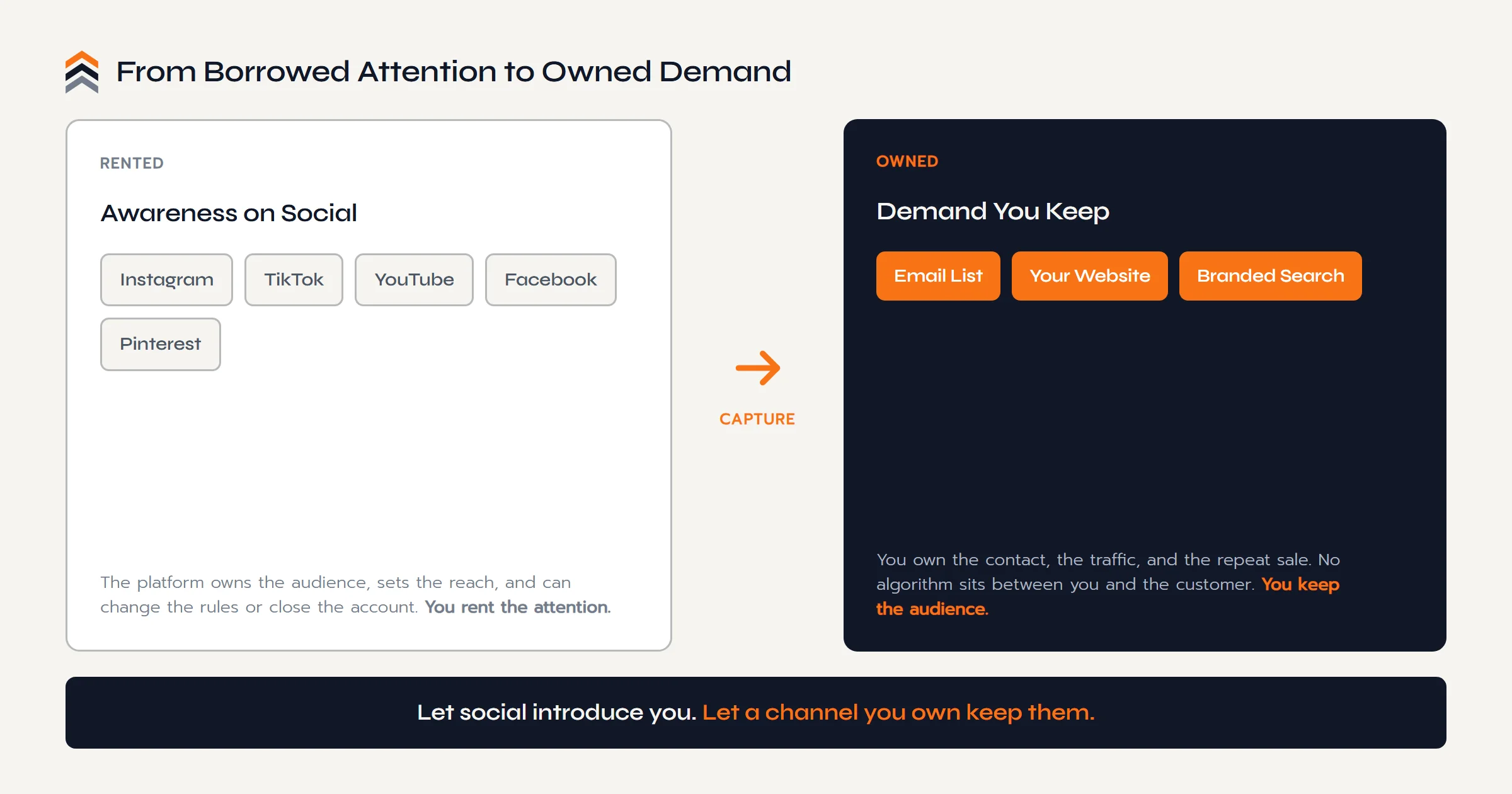
The fix is not to post less. It is to stop letting social be the final destination. A follower who never leaves the feed is worth a fraction of a subscriber who does, because you can reach the second one on your own terms and the first one only on the platform's. Every piece of reach you earn should push toward something you control, so that borrowed attention converts into an audience that stays yours no matter what an algorithm does next.
- Capture the email. A follower is a rented contact; an email subscriber is an owned one. Trade something worth the address, then you can reach that person directly, forever, with no platform in between. This is the whole case for building an email list you own.
- Send them to a site you control. Bio links, story links, and calls to action should point to your own website, where the story, the checkout, and the data are yours, not the platform's. That is why a brand needs a home of its own before it pours effort into rented channels.
- Grow the demand that outlasts the feed. As social awareness lifts your branded search and direct traffic, it compounds into demand from Google that you own outright, the opposite of reach you rent by the day.
An Honest Note
Both of these are true at once:
- Use social media. It is one of the best awareness channels ever built, and skipping it would be a mistake. Post, engage, and grow there.
- Don't let it be the only thing you own. A following is access, not an asset. Build the awareness on social; keep the audience somewhere the platform can't take back.
Rent the reach. Own the audience.
Questions Brand Builders Ask
How Do You Build Brand Awareness on Social Media?
Post consistently with a recognizable visual identity, pick the platforms your buyers actually use, lead with short form video, encourage user generated content, partner with creators, and engage your community. Then route that attention to an email list and a website you own, so the awareness compounds instead of evaporating.
Which Social Media Platform Is Best for Brand Awareness?
It depends on your audience. For visual consumer products, Instagram and TikTok lead on discovery and short form video reach, YouTube builds deep recall, Facebook has the largest overall user base, and Pinterest suits shoppable niches. Choose where your buyers already spend time rather than trying to be everywhere at once.
How Do You Measure Brand Awareness on Social Media?
Track reach, impressions, follower growth, engagement rate, brand mentions, and share of voice inside each platform. But the metrics that prove real awareness sit off platform: rising branded search volume, direct traffic to your site, and email signups driven by social. Those show the awareness became demand you own.
Does Social Media Actually Increase Brand Awareness?
Yes. With more than 5 billion social users worldwide and roughly one in three consumers using social to discover new brands, it is one of the fastest awareness channels available. The caveat is that organic reach is declining, so results increasingly require consistency, short form video, and often paid support.
What Type of Content Increases Brand Awareness the Most?
Short form video, meaning Reels, TikTok, and YouTube Shorts, currently drives the most reach and discovery, followed by user generated content and shareable, entertaining, or educational posts. Consistent visual branding across all of it, the same logo, colors, and voice, is what turns scattered views into actual recognition.
How Long Does It Take to Build Brand Awareness on Social Media?
There is no fixed timeline, but brand building is a months to years effort, not weeks. Memory forms through repeated exposure, commonly cited as five to seven touches before a brand registers. Expect early traction within a few months of consistent posting and meaningful recognition over a year or more.
Is It Better to Build a Following or an Email List?
Both, but they are not equal. You own your email list, and you only rent your social following. Social is best for reaching new people; email is what you keep if an algorithm changes or an account gets suspended. The strongest strategy uses social to grow an email list you own.
The Conclusion
Social media is one of the best awareness engines ever built. It can take a brand from unknown to recognized faster than almost anything else, and any serious brand should use it. The mistake is not using social. The mistake is treating the following you build there as if you own it, when the platform can throttle your reach or close your account at any time.
So build awareness on social with everything you have, and then send it home. Capture the email, drive the traffic to your own site, and grow the branded search that no algorithm controls. Let social do what it is brilliant at, introducing you to new people, and let a channel you own do what social never will: keep them. You already learned this lesson on one platform. There is no reason to learn it twice.
Your sales can live on Amazon. Your brand should not.
The Next Move
Build the Awareness on Social.
Keep the Audience for Good.
Ready to Build
A free call, no pitch script. Walk us through your Amazon business and get a straight answer on what your own brand site would take.
Book a Free CallStill Weighing It
The Push Roadmap is a free PDF with the Ownership Scorecard. Put a number on how much of your audience you actually own today.