
The best ecommerce platforms for small business fall into two camps: hosted platforms you rent by the month, like Shopify, and self-hosted software you own, like WordPress with WooCommerce, with website builders such as Wix and Squarespace sitting between them. There is no universal winner, only the platform that fits your goals, and the choice that matters most is not a feature, it is whether you end up owning your store or renting it. That is the lens this guide uses, and it is the same one that runs through owning a brand instead of renting a presence.
This is the small-business overview. If you are specifically an Amazon seller weighing platforms for a brand site, the deeper, seller-focused comparison lives in the best ecommerce platform for Amazon sellers. Here we keep it broad and honest.
What to Look for in a Platform
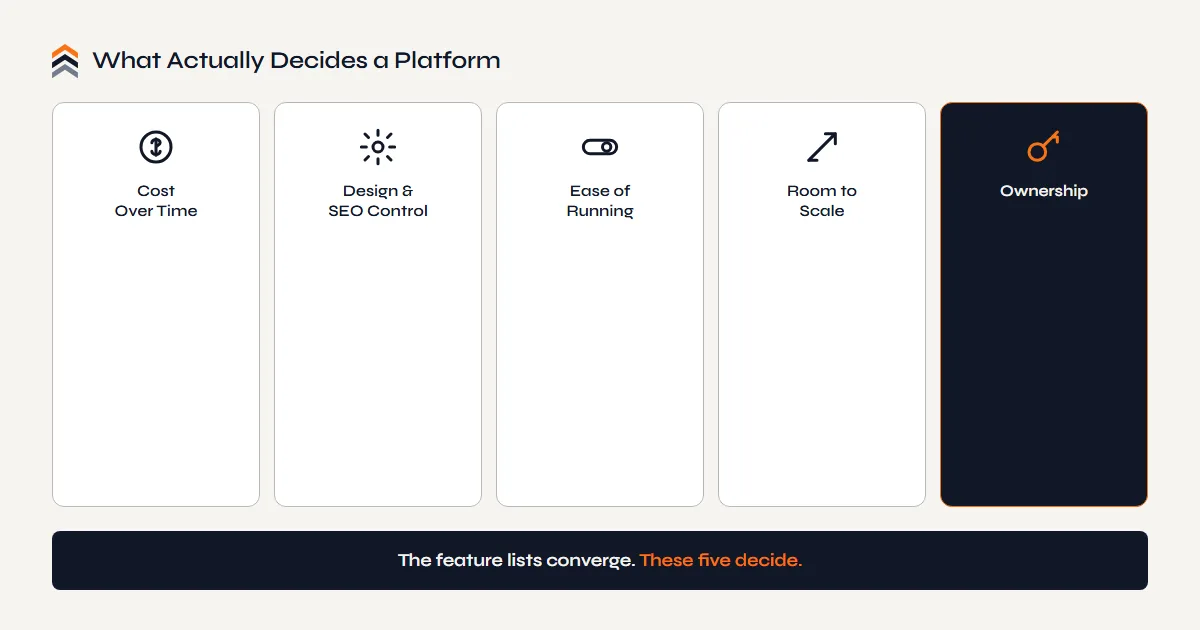
Before the names, know what actually matters, because platform marketing will push features that rarely decide anything. Five things do the deciding for a small business: how much it costs over time, not just at launch; how much design and SEO control you get; how easy it is to run without a developer; how well it scales as you grow; and how much of it you truly own. Weigh those, and most feature-sheet differences fade.
The one that gets overlooked is ownership, and it is the one you feel most later. A platform you rent can change its pricing, its rules, or your access, and your store lives inside its walls. A platform you own puts the files, the data, and the site in your hands. For a business you intend to build into an asset, that is not a technicality; it is the whole difference.
The Main Platforms, Honestly
The landscape has many names, but for a small business it comes down to a handful, each with a genuine best-fit. Positioning and pricing shift, so as of 2026, treat these as shapes to verify, not fixed facts.
- Shopify. A hosted, all-in-one platform you rent monthly. The fastest, most polished way to launch a store solo, with hosting, security, and payments handled. The trade is ongoing rent, fixed URL structure, and a store that lives on Shopify's infrastructure under Shopify's terms.
- WordPress with WooCommerce. Self-hosted, open-source software you own. The deepest control over design and SEO, no rent on the software itself, and the whole site is yours to move or export. The trade is that you, or a builder, handle hosting and upkeep.
- Wix and Squarespace. Hosted website builders that added stores. Genuinely easy and tidy for a small, simple catalog or a brochure-plus-shop, but design is template-bound and the SEO ceiling shows up fast for a brand that wants to compete on search.
- BigCommerce and others. Hosted platforms in Shopify's family, often pitched at stores that want more built-in features without extra apps. Capable, still rented, and worth a look if a specific feature set fits, but the rent-versus-own question is the same.
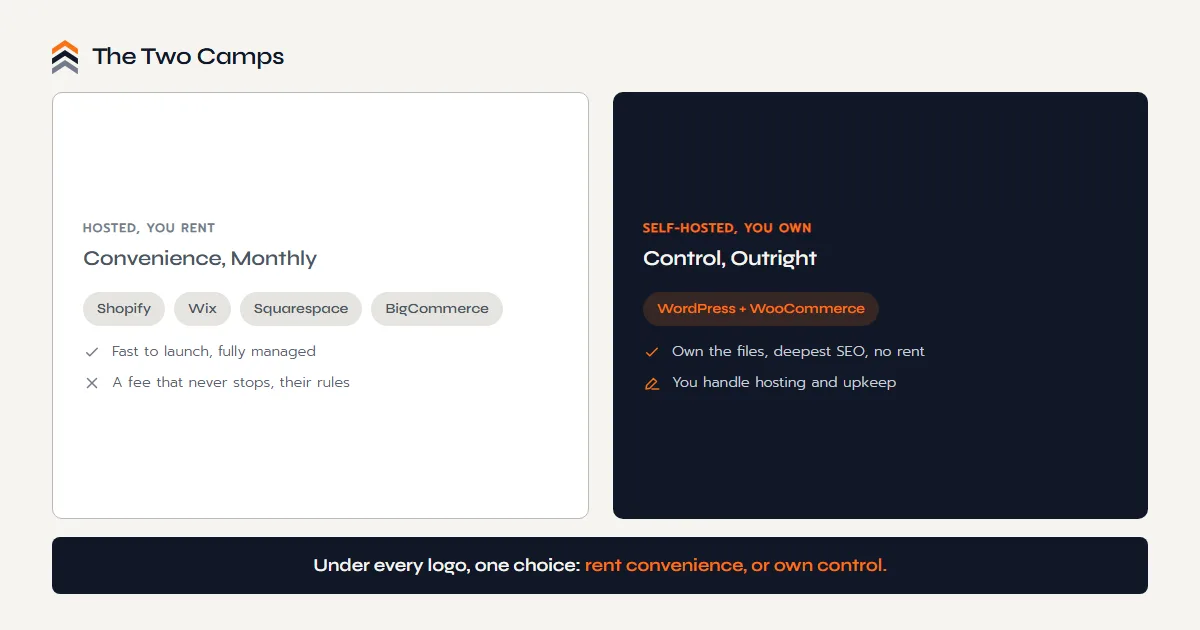
Notice the pattern under the names: nearly every option is either rented convenience or owned control. The specific brand matters less than which side of that line it sits on.
Pick a platform for the store you will have in three years. Not just the one you can open this weekend.

Choosing a Platform to Actually Own?
The Push Roadmap is a free 12 page PDF with the Ownership Scorecard, so you can see what owning your store and brand really looks like before you commit.
Sent straight to your inbox.
The Choice Underneath: Rent or Own
Every platform decision is really this one decision wearing different logos. When you rent, you trade ownership for convenience: someone else runs the infrastructure, and in exchange you accept their fees, their rules, and their limits, for as long as the store exists. When you own, you trade convenience for control: you or a builder handle the technical side, and in exchange the store, the data, and the software are yours to keep, move, and grow without anyone's permission.
Neither trade is wrong, and we will be honest that plenty of good small businesses run happily on rented platforms. But if your reason for building a store is to own an asset, a brand, a customer base, a business worth something one day, then renting the very foundation of it works against the goal. In our view, that is the single most important thing a small-business owner can be clear-eyed about before picking a name off a list.
What Switching Later Actually Costs
"Start simple, move later" is the most common advice on this subject, and it is worth knowing what "later" actually costs before you lean on it. Some things move easily. Your products, prices, and customer list will export, and any competent builder can bring them into a new platform. It is everything built around them that does not travel.
The biggest cost never appears on an invoice, because it is search. Platforms structure URLs their own way, so a migration usually changes the address of every product and category page you have. Handled properly, with a full redirect map, most of that ranking survives. Handled carelessly, you lose positions you spent years earning and traffic falls before it recovers, which is why the groundwork of ecommerce SEO is worth protecting. Then there is the design, which gets rebuilt rather than moved, the apps and plugins with no equivalent on the other side, the connections to your email tool, accounting, and shipping that all get rewired by hand, and the product reviews that often cannot be carried across at all.
There is a timing problem worth naming too. Nobody considers switching while the store is quiet. You consider it once the store has grown enough to feel the limits, which means the migration lands exactly when you have the most products, the most traffic, and the least appetite for a rebuild, and it gets paid for out of months you would rather spend selling.
One asymmetry is worth knowing. Moving a self-hosted store between hosting companies is a much smaller job than moving between platforms, because the software and the files are already yours; you are changing where the store lives, not what it is built on. When you rent, the platform itself is the thing you would have to leave.
None of this makes starting on a hosted platform a mistake. Plenty of owners choose it deliberately, with their eyes open, and it serves them well. In our view it is simply an argument for asking the three-year question now, while the answer still costs you nothing. Choosing a foundation you would keep is cheaper than choosing one you would replace.
How to Choose for Your Business
Cut through it with a few honest questions. Do you want to launch fastest and simplest, run solo, with the least technical involvement? A hosted platform earns its rent. Do you want the most control, the best SEO, and a store you own outright as a long-term asset? Owned software is worth the extra setup. Is this a small, simple catalog that may never need to scale? A builder might be all you need.
Whatever you choose, choose for the three-year version of your business, not the launch-week version, because migrating a grown store is real work and some of what you build never transfers. If the goal is ownership, the platform choice is not a detail; it is the first brick, and the same logic guides how to actually start the store once the platform is settled.
Questions Owners Ask
What Is the Best Ecommerce Platform for a Small Business?
There is no single best, only the best fit. For the fastest hands-off launch, hosted platforms like Shopify lead. For full ownership, deep SEO, and no monthly rent on the software, WordPress with WooCommerce leads. The right answer depends on whether you value convenience or control more, and where you want to be in three years.
What Is the Cheapest Ecommerce Platform for Small Business?
Cheapest to start is not cheapest to own. Open-source WooCommerce on WordPress has no software fee, only hosting and a domain, so it can run low at the entry level. Hosted platforms bundle everything into a monthly fee that is predictable but never stops. As of 2026, verify current pricing, since it changes often.
Which Ecommerce Platform Is Best for a Beginner?
For a true beginner who wants to launch alone with the least setup, a hosted platform like Shopify or a builder like Wix is the gentlest start, because hosting, security, and payments are handled for you. The trade is less control and ongoing rent. Many owners start there and move to owned software as the store grows.
Is Shopify or WooCommerce Better for a Small Business?
Shopify is a hosted store you rent monthly, fast and managed. WooCommerce is a plugin that turns self-hosted WordPress into a store you own outright, with deeper SEO and no platform rent, but it needs hosting and upkeep. A convenience-first owner leans Shopify; an ownership-first owner leans WooCommerce.
Do I Need an Ecommerce Platform to Sell Online?
To run your own store, yes, some platform provides the cart, checkout, and payment plumbing. You could sell only through a marketplace like Amazon and skip your own store, but then the platform keeps the customer and the brand. An ecommerce platform is how you build the store you own beside the marketplace.
The Conclusion
Ecommerce platforms for small business look like a long list of competing names, but the choice is simpler than the marketing makes it. Under every logo is one question: will you rent this store or own it? Hosted platforms trade ownership for convenience; owned software trades convenience for control. Both are legitimate, and the right pick depends on what you are building toward.
If the aim is a business worth something, weigh ownership as heavily as ease, and choose the foundation you would still be glad to stand on in three years.
Your sales can live on Amazon. Your brand should not.
The Next Move
You Know the Options.
Let's Build the One You Own.
Ready to Build
A free call, no pitch script. Tell us about your business, and get a straight answer on the platform and build that would actually fit it.
Book a Free CallStill Weighing It
The Push Roadmap is a free PDF with the Ownership Scorecard. See what owning your store and brand really looks like, mapped in order.